The Shift Toward Mobile-First Casino Design — What PlataBet Players Should Know
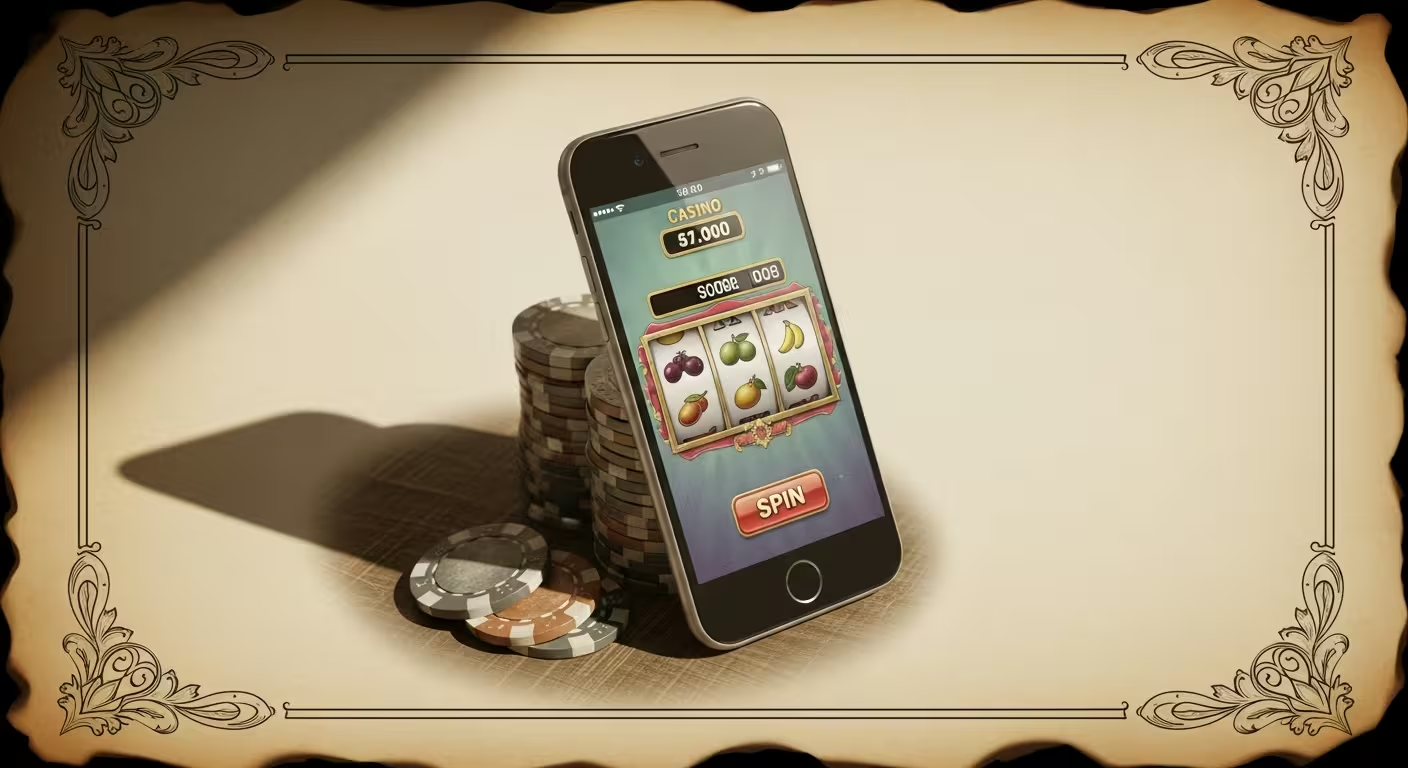
For most of the 2000s, building an online casino meant designing for a desktop monitor and hoping the result would fit a phone. Operators would shrink menus, stack columns into a single scroll, and call it responsive. Players accepted the cramped result because mobile gaming was new. That era is over.
Today, the leading studios and platforms design the phone experience first and scale up from there. Mobile-first design treats the smallest, most constrained screen as the primary target — every element must earn its place before the layout expands for a 27-inch monitor. PlataBet’s platform is built on this model, and if you’ve noticed that the lobby, cashier, and bonus hub feel natural on your phone, that is why.
Understanding this shift gives you a practical edge. Your casino strategy — how you choose games, manage sessions across devices, and interpret loading speeds — connects directly to decisions made at the design stage. This guide explains what mobile-first casino design actually means, what it changes for players, and what it doesn’t.
Key Takeaways
Here’s what mobile-first casino design means in practice and why it matters for every session.
The phrase gets used loosely in industry coverage, so a quick summary helps before the deeper concepts arrive.
- Mobile-first means the phone layout is designed first; desktop is an expanded adaptation of that base.
- Touch-friendly controls, single-thumb navigation, and faster initial load times are the direct outcomes.
- Games built under this model use adaptive asset delivery — lighter graphics load first, richer detail streams in as bandwidth allows.
- At PlataBet, the bonus hub, game lobby, and cashier are all built around one-handed use on portrait-mode screens.
- A sound casino strategy accounts for the fact that the same game can behave differently on mobile and desktop when the port isn’t full parity.
Core Concepts
Here’s what mobile-first design involves at a technical level and how those decisions reach the slot or live table you’re playing.
Mobile-first design is a development philosophy where engineers write the narrowest-screen layout first. The alternative — responsive retrofitting — starts with a wide desktop layout and tries to compress it. Retrofitted designs carry the desktop’s assumptions into every adaptation: menus collapse awkwardly, buttons crowd the bottom bar, and slot reels built for a landscape canvas feel cramped in portrait mode.
The statistical pressure behind this shift is direct. Industry data consistently shows that more than 70% of online casino sessions now start on a mobile device. Studios responded by restructuring their asset pipelines — the systems that serve graphics, sounds, and animation files. A mobile-first pipeline serves the lightest version of every asset first and layers on fidelity as the device’s connection and hardware allow. This approach is called progressive enhancement, and it means even a mid-range phone on a 4G connection can open a slot in under two seconds.
For slot games, mobile-first construction typically means reels are taller than wide in their native format, spin and bet controls sit within thumb reach at screen bottom, and bonus triggers respond to a single tap rather than a hover-and-click. Live table games have been reworked so the primary camera angle isolates a single dealer rather than sweeping a wide studio — a choice that makes sense on a 6-inch screen and scales cleanly to a 13-inch laptop.
Not all game categories have adapted at the same pace. Slots — which already existed as self-contained, single-screen experiences — have led the mobile-first transition. Poker variants and sportsbook interfaces, which involve more data-dense displays, have taken longer to fully redesign. At PlataBet, you’ll notice this pattern: the slot lobby loads and navigates cleanly on a 5-inch screen, while the more complex table game filters reward a few extra inches of display.
| Option | Best For | Drawbacks |
|---|---|---|
| Mobile-First Slots | Phone players, fast-casual sessions | May underuse desktop screen real estate |
| Desktop-First Slots | Large-monitor sessions, detailed paytable use | Can feel cramped or require rotation on phones |
| Live Tables (Mobile-First) | One-handed play, on-the-go sessions | Narrower camera view than full studio shot |
| Live Tables (Desktop-First) | Immersive studio experience on wide screens | Scroll-heavy interface on smaller displays |
A well-calibrated casino strategy accounts for these construction differences. If you play on a large desktop monitor, games designed mobile-first may use only part of the available canvas — not a flaw, simply the base format scaling up. Conversely, a desktop-first slot run on a phone may ask you to pinch-zoom or rotate the device to reach all controls.
Takeaway
Here’s what this design shift means for your day-to-day sessions at PlataBet.
The practical implications of mobile-first casino design are not theoretical. They show up in how quickly a game lobby populates when you switch from Wi-Fi to mobile data, how comfortably you can manage a live blackjack session with one hand, and whether bonus feature animations run at the same frame rate on your phone as on your desktop.
PlataBet’s platform synchronises account state in real time, which means pausing a bonus round on mobile and continuing on desktop is safe — the game state is stored server-side, not locally on your device. This continuity is a direct product of mobile-first architecture: systems designed for intermittent mobile connections are built to resume cleanly.
Live tables and game-show titles often reward a larger screen, while slots and fast-play games are built to thrive on a phone.
If your casino strategy already involves high-frequency slots during commutes and live roulette at home, you’re applying device-aware play without naming it. Recognising that the interface was designed with this habit in mind — not merely accommodating it — lets you set accurate expectations and avoid reading a layout quirk as a malfunction.
Common Misconceptions
Here’s what players frequently misunderstand about mobile-first design — and what the reality actually looks like.
A few persistent myths surround the topic. Addressing them directly sharpens your sense of what this design philosophy can and cannot deliver.
Mobile-first means lower visual quality. This is the most common objection, and it’s outdated. Modern WebGL rendering and adaptive delivery mean a mobile-first slot can match desktop visual fidelity — the difference is the sequence in which quality layers load, not whether the high-resolution layer exists at all. On a fast connection with a capable device, the visual experience is identical.
Desktop players lose features. Because desktop receives the scaled-up adaptation, most builds add side panels, expanded paytable overlays, keyboard navigation, and in some cases multi-game views that the phone layout never shows. Mobile-first does not reduce desktop capability; it ensures mobile capability is the guaranteed baseline.
Casino strategy is device-neutral. This misconception is subtle. Spin rate, session pacing, and auto-play availability can vary by platform build if a game’s controls aren’t fully consistent across mobile and desktop. Before committing to a fixed bet-sizing or session-length approach, test it on both form factors — a difference of even one spin per minute compounds across a long session and can skew your calculations.
Switching devices mid-session puts your balance at risk. Modern platforms, including PlataBet, write game state to the server after each game round — not just at session end. Your balance, bonus progress, and open rounds are safe to pick up on any connected device. It’s one of the quieter advantages of a well-implemented mobile-first architecture.